


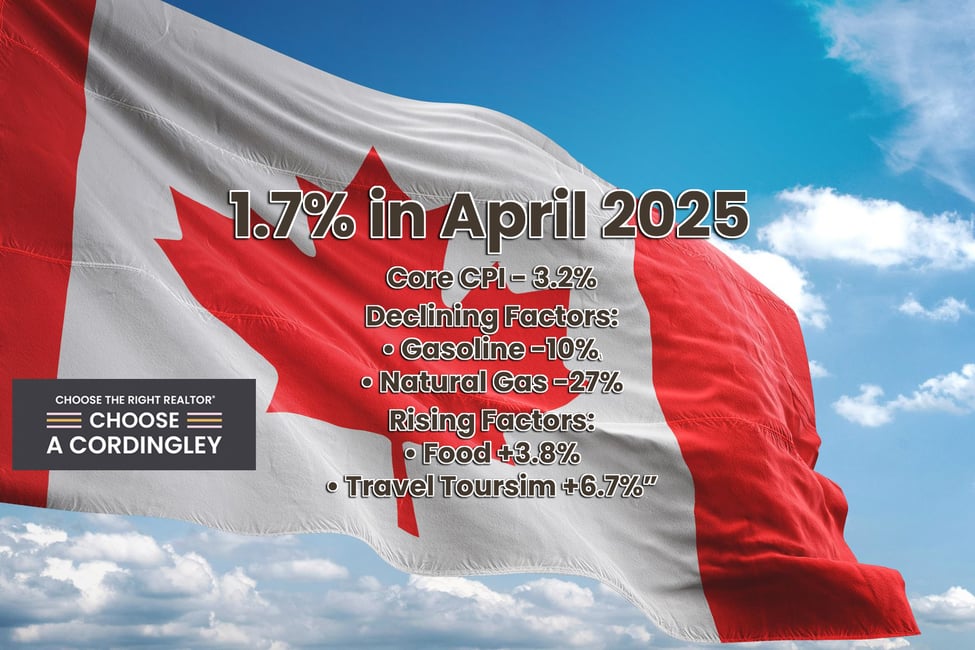
Canada's annual inflation rate decelerated to 1.7% in April 2025, down from 2.3% in March, according to Statistics Canada. This marks the lowest inflation rate since early 2021 and is primarily attributed to a significant 12.7% drop in energy prices, following the federal government's removal of the consumer carbon tax on April 1.
Key Drivers of April's Inflation Slowdown
The elimination of the consumer carbon tax led to notable decreases in energy costs, with gasoline prices falling by 18.1% and natural gas prices declining by 14.1% year-over-year. These reductions were further influenced by lower crude oil prices and increased global supply from OPEC+ nations
Despite the overall decline in headline inflation, core inflation measures—which exclude volatile items like food and energy—rose in April. The CPI median increased to 3.2% and the CPI trim rose to 3.1%, both reaching 13-month highs. This suggests that underlying inflationary pressures persist in the economy.
Sector-Specific Price Changes
While energy prices decreased, other sectors experienced price increases. Food purchased from stores rose by 3.8%, with significant year-over-year increases in items such as fresh or frozen beef (+16.2%), coffee and tea (+13.4%), and sugar and confectionery (+8.6%). Additionally, travel tour prices surged by 6.7%, reversing a 4.7% decline in March.
Implications for Monetary Policy
The mixed inflation data presents a complex scenario for the Bank of Canada (BoC). While the drop in headline inflation might suggest room for interest rate cuts, the rise in core inflation measures indicates sustained underlying price pressures. Consequently, market expectations for a rate cut at the BoC's next policy decision on June 4 have diminished, with the probability falling from 65% to 48%.
Economists, including Darcy Briggs of Franklin Templeton Canada, suggest that the BoC may adopt a cautious approach, monitoring upcoming economic indicators—such as the Q1 GDP figures due on May 30—before making policy adjustments.
Regional Variations
Inflation rates varied across provinces. Quebec experienced a 2.4% inflation rate, slightly higher than the national average, partly because its cap-and-trade system meant consumers were less affected by the federal carbon tax removal. In contrast, Nova Scotia saw a slower inflation rate due to a decrease in its Harmonized Sales Tax (HST) in April.
As Canada navigates these inflation dynamics, the BoC's forthcoming decisions will be pivotal in shaping the country's economic trajectory.
📣 Choose the Right REALTOR® - Choose A Cordingley! Barry & Tracy Cordingley!
🙏 Whether you're buying, selling, or just exploring the market, we're here with honesty, care, and experience to guide you every step of the way.
📍 Thinking of making a move?
Don’t wait for a sign — look for an expert.
✅ BUY • SELL • SAVE with Barry & Tracy Cordingley

